The filter was serialized to XML, travelled to the server, was taken apart there and concatenated into text variables. Impossible to index, because the query did not exist until it ran.
HDI had solved that problem in 2008, in the stored procedure its developers had spent fifteen years tuning.
We didn't build a faster query. We stopped reinventing the one that already existed.
BACK TO THE FOUNDATION.
Twelve months to rebuild it
~50~5012345001234567890
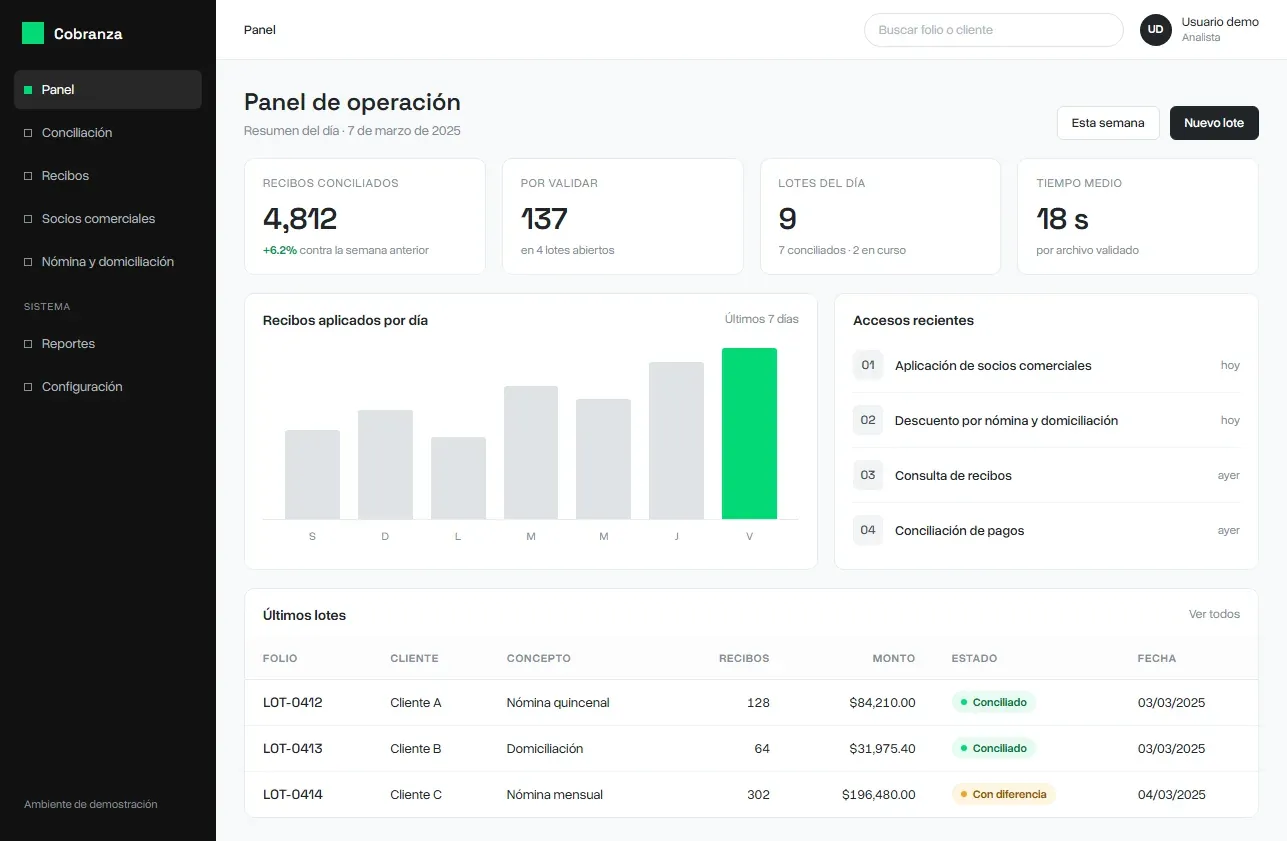
Analysts and coordinators using it every day
12 MONTHS10120123456789012MONTHS
Of rebuilding to take the complex modules to production
Business partners and payroll deduction, the most complex modules, now run in production.
First we built a base template: data access, email, notifications and errors with traceability. Then the modules, starting with the ones carrying the least business logic.
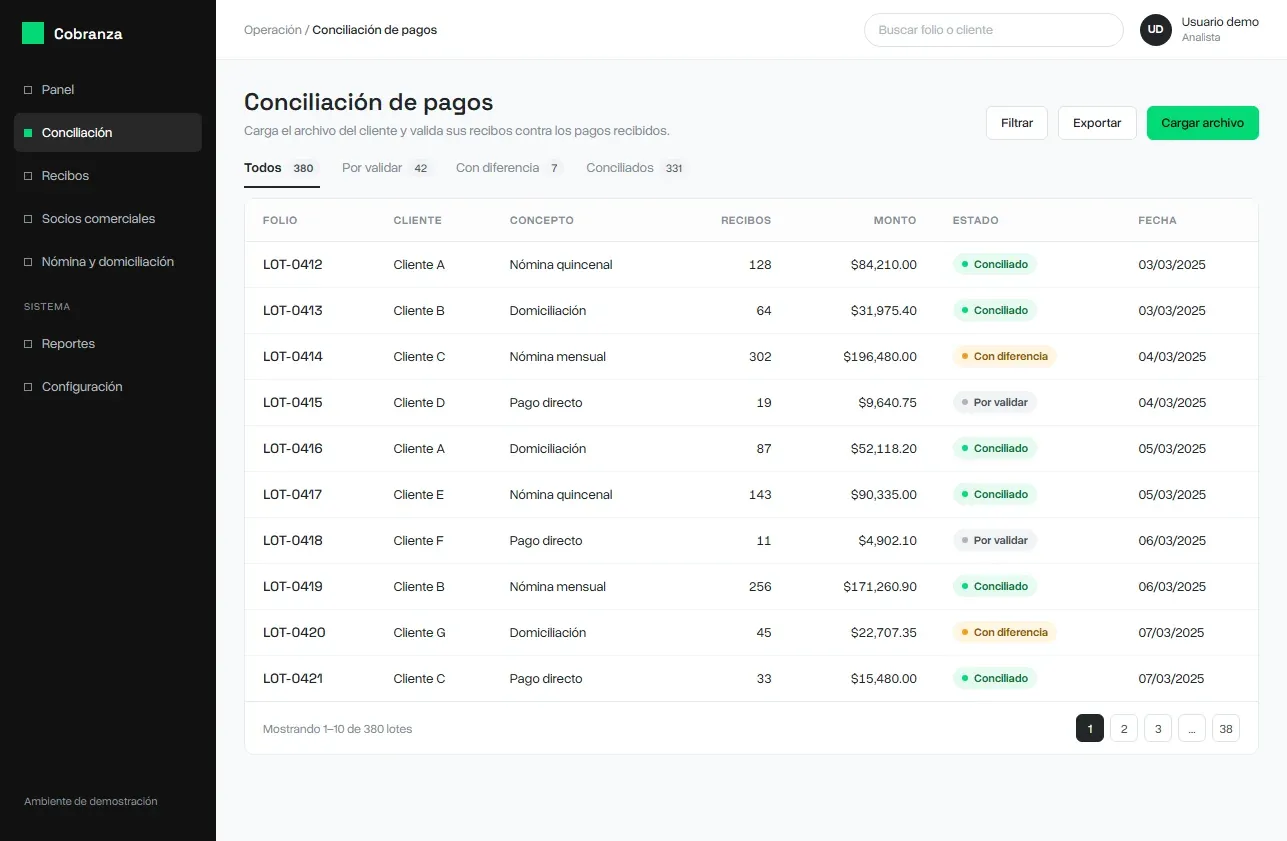
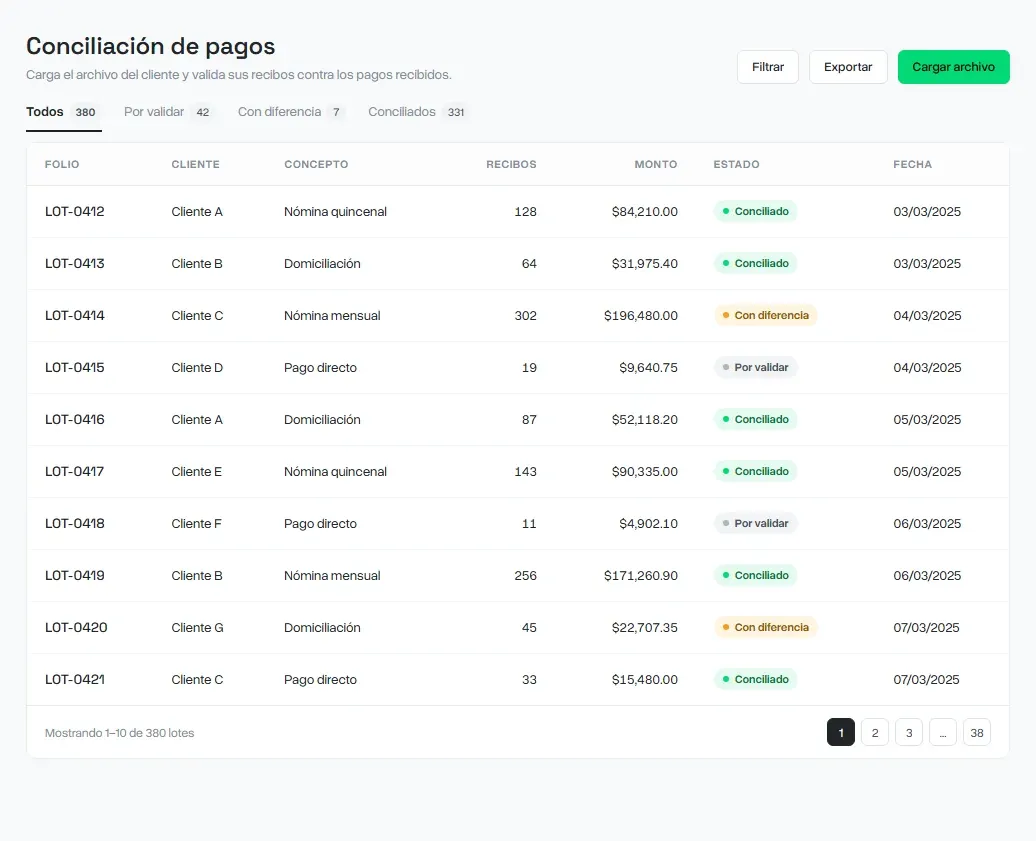
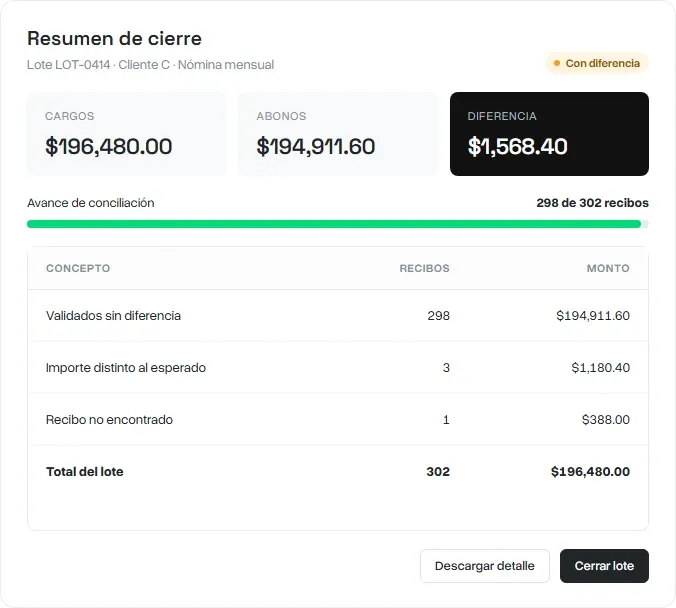
The analyst received the client's file and checked it receipt by receipt, adding up by hand. In user testing, one analyst spent two hours on a single partner. Today the analyst uploads the file and the system checks it in seconds, with the discrepancies flagged and the totals calculated.
Posting receipts in bulk
Posting more than 50,000 receipts took over an hour and locked the table: the rest of the operation waited. Today it takes 10 to 20 minutes, without stopping the rest of the operation.
Collecting a premium with no reference
The agent would call or email a photo of the payment slip, and follow-up depended on email; resolving it took anywhere from a few hours to two days. Today the agent files the request from the portal with the slip attached and it is resolved the same day.
The scale
More than 20 business partners configured in production, each with its own file structure. A portal open to a roster of more than 10,000 agents. Around 50 analysts and coordinators working inside the system every day.
OPERATIONAL DISCIPLINE.
How we worked
2D → MIN
To rebuild the test environment
+300+301230012345678900012345678901234567890
Versioned procedures, each with its execution plan
We wrote down HDI's database standard and codified it. We built a tool that checks every delivery against that standard before it is released.
OPERATIONAL AUTONOMY.
Today
The new collections system is now run by the HDI team. We stabilized it, rebuilt it and handed it over for their people to keep running.